
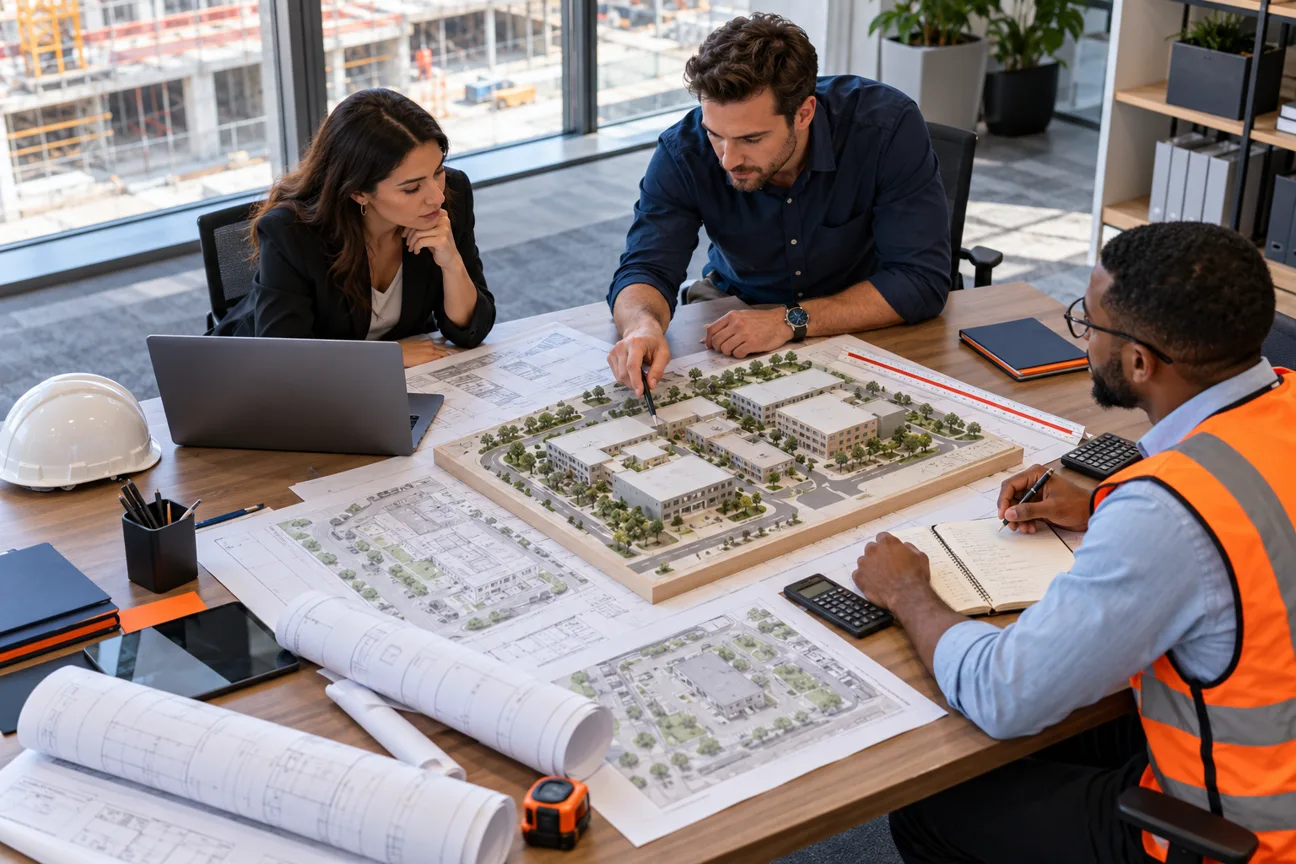
What is preconstruction?
Preconstruction is the planning and coordination work that helps a construction team understand what it intends to build, how it could deliver the work, and what resources it may need. It can include estimating, design coordination, procurement planning, schedule development, constructability reviews, and identifying unresolved assumptions before field work begins.
The process varies by project and delivery approach. Some contractors participate while the design is developing; others become involved when documents are ready for bidding. Responsibilities may sit with a dedicated preconstruction team or be shared among estimators, project managers, field leaders, and specialists. The useful question is which decisions and deliverables the team owns.
How preconstruction differs from estimating
Estimating focuses on developing a price or cost forecast for a defined scope using quantities, labor assumptions, equipment, materials, and supplier or subcontractor input. Preconstruction can include that work, along with broader planning about sequence, access, procurement, and coordination.
For example, an estimator may compare proposals for a mechanical package. The wider preconstruction discussion might also consider equipment access, installation sequence, design information still needed, and delivery dates. A price is more useful when the team understands the scope and assumptions behind it.
Five areas a preconstruction team may review
Each project needs an approach suited to its scope and stage of development. The following areas provide a practical introduction rather than a universal checklist.
- Scope: what the documents describe, what remains undefined, and which exclusions or assumptions need discussion.
- Cost: quantities, proposals, allowances, and the basis of the estimate as information develops.
- Schedule: dependencies, milestones, expected activity durations, and information needed to validate the plan.
- Procurement: required approvals, supplier commitments, delivery assumptions, and responsibility for follow-up.
- Field execution: access, staging, trade interfaces, work-area readiness, and other conditions that affect the proposed sequence.
A practical example: planning a renovation
Consider a hypothetical office renovation in a building that remains occupied. Before work starts, the team may need to understand which spaces can close, where materials can enter, how deliveries reach the work area, and which activities depend on owner decisions. Those conditions influence both pricing and the sequence of work.
An estimator might document the assumed working hours and scope exclusions. A superintendent could flag staging constraints. A scheduler could connect approvals and deliveries to planned activities. A project manager might coordinate the required decisions. Preconstruction helps these inputs become a plan the team can review, rather than separate assumptions that conflict later.
Common preconstruction careers and responsibilities
Job titles overlap between contractors, so compare responsibilities carefully. An estimating position may include substantial preconstruction coordination, while a preconstruction manager opening may emphasize client communication, team leadership, or oversight of several estimates.
| Role | Responsibilities to look for |
|---|---|
| Estimator | Quantity takeoffs, pricing assumptions, proposal comparisons, and estimate documentation. |
| Preconstruction manager | Coordination of estimating and planning inputs, design-stage discussions, and review of unresolved scope. |
| Scheduler or planner | Activity sequencing, dependency analysis, schedule updates, and explanation of milestone assumptions. |
| Project engineer or coordinator | Document tracking, meeting follow-up, information requests, and support for procurement or handoff. |
Skills that help candidates enter preconstruction
Useful skills include reading drawings, organizing information, checking assumptions, comparing proposals, and explaining an unresolved issue clearly. Field experience can help someone ask practical questions about installation, access, and sequencing. Analytical or project-support experience can demonstrate accuracy and follow-through.
On a resume, describe work you actually performed. “Compared subcontractor proposals and recorded exclusions for the estimator’s review” conveys more than “supported preconstruction.” Name the project setting, your level of responsibility, and the tools you used. Education and experience requirements vary, so use the specific posting as your guide.
Questions to ask about a preconstruction job
Use the interview to understand the project types, decision-making process, and balance of technical and relationship work. Ask for a concrete example of what you would own on an upcoming assignment.
- At which design stage does the team typically become involved?
- Would I develop estimates, coordinate planning inputs, or support both?
- How do field teams contribute to constructability and sequence reviews?
- Who reviews assumptions, exclusions, and changes between estimate versions?
- How is information handed to the operations team after award?
- What training and review would support my first assignments?
What employers should explain when hiring
A useful preconstruction job posting identifies the markets served, typical project scope, expected responsibilities, and reporting relationship. Explain whether the role prepares takeoffs, leads estimate reviews, coordinates designers and trades, or supports client discussions. Distinguish essential experience from skills the team can develop.
Also clarify location, site visits, travel, schedule, and compensation details you can provide. Specific expectations help candidates judge the opportunity and give interviewers a consistent basis for assessment. A broad title alone cannot show whether a candidate fits the work.
Explore preconstruction opportunities
Search preconstruction, estimator, and scheduler separately, then compare the duties. Relevant opportunities can appear under different titles, and the right next step depends on the experience you want to build. Search results reflect current inventory and may not contain a suitable opening every day.
Use the related job searches below to explore ConstructionRolesNow.com listings. Read the linked estimator, scheduler, and project manager guides to understand how these roles contribute to a construction project and prepare examples that show your own experience.